CBDOilReviews.com

Tag: Medicinal

  • Marijuana User’s Guide on How to Grow and Harvest Medicinal Cannabis

    Marijuana User’s Guide on How to Grow and Harvest Medicinal Cannabis

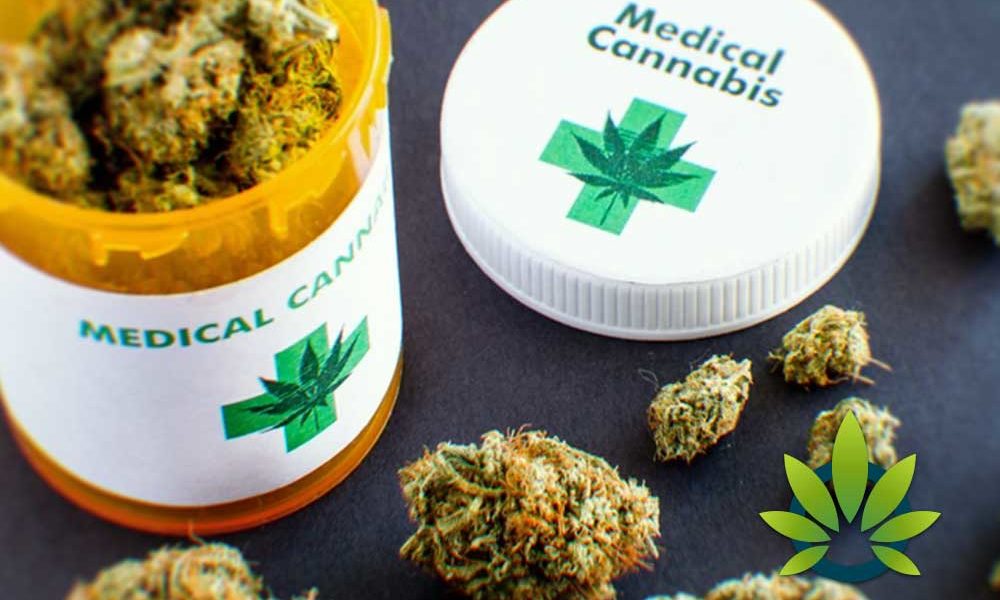
    As controlled marijuana has come to the forefront of medical debate and more countries and states are allowing its use for specific ailments, circumstances have arisen for both the commercial cultivation and the private growing of medicinal cannabis strains.

    The most popular strains of medicinal cannabis are Northern Light, Aurora Indica, Jack Herer, and Super Lemon Haze, as these are fairly easy to grow. Although all types of marijuana essentially contain the same breakdown of ingredients, they will vary in taste and potency. The varieties mentioned here will yield a crop most likely to provide consumers with relief from their ailments.

    Procuring auto-flowering and feminized seeds from a reputable dealer is the best way to begin and will produce a faster yield. Auto-flowing plants will produce the flower bud that contains the ingredients needed for medical use, and feminized seeds increase crop yield, as only the females carry the buds that will get the consumers high. Growers must strive to minimize stress to plants because this can cause the female plants to transform into males.

    Growing Marijuana

    There are several methods of sustaining a growing marijuana plant. A grow-tent system with lights and exhaust fans is a good place to start. LED lighting is also a popular source of light, as it is inexpensive to run for long periods of time. Cannabis seeds need warmth and moisture for germination, although they don’t require many nutrients to start. During the first phase of the plants’ growth, the lights should be on for 24 hours.

    Once the plant has been growing well for approximately five weeks, flowering can be induced by switching the light schedule to 12 hours on and 12 hours off. If growing outside, the timing of planting marijuana should be considered with regard to season, temperature, daylight, and potential bad-weather periods. A hydroponic system is usually an option for large-scale producers who will supply medicinal cannabis to the wider industry.

    Harvesting Marijuana

    Harvesting the marijuana is the final stage of the process and involves the grower being aware of any stressed plants that may have morphed into a male state. Their flowers will have pollen sacks where the many branches connect the central stem. However, female plants can be identified by their white hairs, or pistils, at the same region on the plant. Just prior to harvest, a grower should try to reduce any additional nutrient feeds to the plants, as this may present itself in the form of strong taste in the buds. Plants are harvested in their complete form once the pistils turn dark.

    The plant is cut off at its base, stripped of excess leaves, split into single branches, and hung upside down to dry at room temperature. This drying process takes one week, after which the individual buds can be peeled from the plant and placed in jars to cure. At first, the jar will need some airflow every day; this can then be steadily reduced over time. The whole process of curing cannabis will take about six months.

    Home growers, or anyone considering setting up a larger medicinal marijuana business, should be well informed of the laws and requirements that govern their state or country of residence.
  • Medical Marijuana In California: How Much Cannabis Can You Legally Possess?

    Medical Marijuana In California: How Much Cannabis Can You Legally Possess?

    Medical Marijuana In California

    Medical Marijuana has been legal in California since the people of California enacted Proposition 215 in 1996. Proposition 215, also known as “the Compassionate Use Act,” allows people with terminal and/or chronic illnesses to grow and/or possess marijuana. The somewhat humorously named “Senate Bill 420” was signed into law by Governor Gray Davis in 2003. This bill created a system of patient identification cards and allowed for the formation of non-profit organizations to provide these patients with marijuana.

    How Much Cannabis Can You Legally Possess?

    Although SB 420 created a somewhat uniform patient identification system throughout California, how much cannabis a medical marijuana patient can “legally” possess varies by city and county.  Every county and municipality is allowed to set its own possession limit, so long as the limit does not drop below a statutory minimum. Currently, the statutory minimum is six (6) mature plants OR twelve (12) immature plants AND up to eight (oz) ounces of processed cannabis flowers.

    In Alameda, Alpine, Amador, Calaveras, Contra Costa, Del Norte, Fresno, Glenn, Imperial, Inyo, Kern,  King, Lake, Lassen,  Madera, Marin, Mariposa, Merced, Modoc, Mono, Monterey, Napa, Orange, Placer, Plumas, Riverside, Sacramento, San Benito, San Bernadino, San Diego, San Joaquin, San Luis Obispo, San Mateo, Santa Barbara, Santa Clara, Siskiyou, and Solano Counties, a patient may possess the statutory minimum: Six (6) mature plants or twelve (12) immature plants, and eight (8) ounces of processed flowers (often referred to as “bud”).

    The following cities and counties allow medical marijuana patients to possess more than the statutory minimum:

    Cities

    • Arcata: In Arcata, you may possess up to ten (10) mature plants, and up to thirty-two (32) ounces of “dried” or “processed” cannabis.
    • Berkeley: In Berkeley, you may possess up to ten (10) mature plants and up to forty (40) ounces of processed cannabis.
    • Oakland: In Oakland, the regulations are very liberal. You may possess up to seventy-two (72) plants and forty-eight (48) ounces of processed cannabis.
    • Sebastopol: In Sebastopol, a patient may possess seventy-two (72) ounces (that’s four and a half pounds!) of processed cannabis.

    Counties

    • Butte: For plants, this county follows the statutory minimum. However, a patient may possess up to one pound of processed marijuana.
    • El Dorado: In El Dorado, the guidelines are complicated and vary with growing season. Check with your physician, the district attorney’s office, or the local health department for guidance.
    • Humbolt: A patient may possess forty-eight (48) ounces of processed marijuana.
    • Nevada: A patient may possess thirty-two (32) ounces of processed marijuana.
    • San Francisco: Possession is considered on a case-by-case basis.
    • Shasta: A patient may possess approximately twenty-two (22) ounces of processed marijuana.
    • Sonoma: A patient may possess up to thirty (30) plants and up to forty-eight (48) ounces of processed marijuana.

    Municipal and county guidelines are subject to change; local politics can be volatile. It is vital that patients, physicians, and caregivers remain informed in order to remain in compliance with local law. As a patient, you must bear in mind that your physician may not know the laws that apply where you live.

    If you are the caregiver of a severely ill or incapacitated person, be aware that there are legal steps you must take in order to obtain and/or possess marijuana on that person’s behalf. Information about these steps is available from the state of California, and many online sources.

    Medical Marijuana In California Conclusion

    Although California law allows possession of marijuana for medical purposes, it is still a banned substance under federal law. Therefore, possession of medical marijuana is not without risk.

    If you are planning a move or an extended vacation, even to another state where medical marijuana is legal, you must do your research. Each state’s requirements and rules vary. Some states severely restrict the circumstances under which cannabis is available. If at all possible, consult with an attorney well-versed in medical marijuana law and a medical professional before you leave California.