CBDOilReviews.com

Category: Marijuana Movement

  • Elixinol Global Puts Support Behind Waste-Based Hemp Startup After Hemp Production Legalization

    Elixinol Global Puts Support Behind Waste-Based Hemp Startup After Hemp Production Legalization

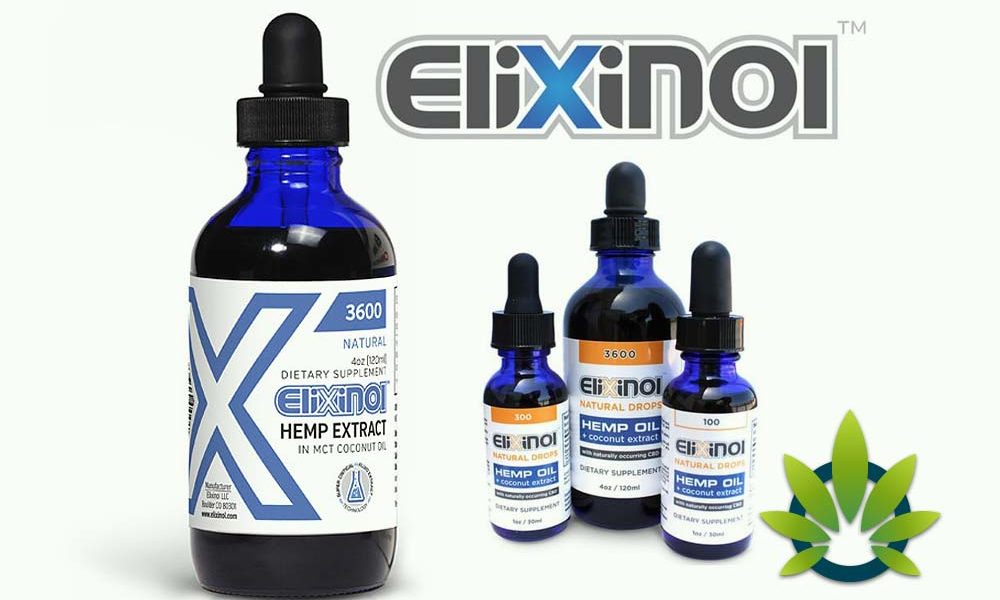
    On Thursday, the Farm Bill was signed into effect, and hemp production was finally legalized. In the process, this market a mange advantage for companies that manufacture cannabidiol (CBD) products, since it was considered legal. Though these companies are still not afforded the benefit of public advertising, the passage of the bill marked a major opportunity for the companies to advance, like Elixinol Global, according to a report from Yahoo! Finance.

    Elixinol Global, the fifth largest CBD company based on market share, is seeking to make CEO Paul Benhaim’s dreams come true. The original plan, which was developed in the early days of the 2000s, was to use hemp waste to develop bioplastics that were completely biodegradable, replacing traditional plastic that uses fossil fuel. With 20 years of working on startups around this concept, it ultimately failed as a result of the minimal hemp production at the time.

    Now, with the Farm Bill making it possible to increase this harvest, Benhaim’s dream may come to fruition. He explained,

    “To be truly cost effect effective with bioplastics, it’s all about being close to production. So, with the Farm Bill and people growing hemp in the U.S., there will be more biomass available and we can use the waste product for whatever they are growing hemp for.”

    Presently, the production of hemp seems to be focused on using the CBD extract for creams, tinctures, supplements, and edible products. With the leftover materials from the production process, the industry had previously contributed it to be used in stock feed, since the laws didn’t allow for it to really be used for anything within the U.S. The new bill makes it possible for Benhaim to use the waste in his startup, Hemp Plastic Company, for the development of four hemp-plastic polymers that are already in the works. Based on their timeline, this new company should debut the product by January next year.

    Benhaim commented, “There’s no one doing this quite on the scale that we’re preparing for.” However, he wasn’t actually the originator of the idea. While working on the concept, he still has missing pieces to the production process that were crucial to the cost efficiency that would make it comparable to the other companies out there. That’s when he brought in Kevin Tubs, who was both a hemp enthusiast and a packaging company owner from Alaska.

    Explaining, Benhaim continued, “He fit in a number of pieces that fixed the issues I had always seen — how to use existing equipment and how to make it cost effective. He showed me a way, a path to making hemp plastics cheaper than petrol chemical plastics.” The partnership offered a solution that led to the seed round to launch the venture in 2017.

    Last year, Tubbs and Benhaim attended a Los Angeles trade how to demonstrate their prototypes. On the reaction, Tubbs said, “Initially, I thought your small early adopters would be our market, be we didn’t realize what the response would be from the big guys. We’re being embraced by large companies with multimillion-unit orders.”

    Right now, the company will have to start small, offering a 50-million-pound capacity next year, in comparison to the 300 million tons of plastic that the rest of the world creates annually. As the alternative proves its viability and value, the team hopes to expand their reach to become an eco-friendly and affordable alternative that companies gravitate towards.

    Tubbs said, “Effectively, we’ve reduced plastic pollution to a design decision. There’s a cache of people trying things that are greener. Our prices are competitive. It’s a convergence of a lot of things.” He took the opportunity to plug that their product only costs 6% more than the current plastic option, which could make them closer to the traditional market. He added, “It’s not that hemp plastic isn’t out there. It’s just about four or five times the cost of raw polymer. You can be the greenest guy on the street, but at four to five times the cost of polymer, you may not go with it.”

    The company could be challenged with the cheap price at the moment, considering the low price that oil is seeing for the first time in a year and a half. However, once the prices go back up, this hemp-based plastic may be the most cost-efficient choice. Bringing up an important point with the production of this material, Hubbs added, “I just know that we’ll never face that volatility because of what we do with hemp.

    With many CBD companies rising up right now, the Hemp Plastic Company could have a new audience that would be more than willing to pay for the cost for products that will match their brand goes. Still, Tubbs and Benhaim was to zone in on the entire market, rather than just becoming a go-to for exclusive CBD and cannabis companies.

  • How the CBD Oil (Cannabidiol Cannabis Compound) Popularity May Overtake Marijuana

    How the CBD Oil (Cannabidiol Cannabis Compound) Popularity May Overtake Marijuana

    The White House shocked the press and the world recently when President Trump made the decision to sign off on the Farm Bill, which would legalize the growth and sale of hemp-based products—including the increasingly popular CBD. Though this is great news for proponents of hemp for use in a variety of products, including oils, clothing, bags, and even paper, some analysts argue that it might spell trouble for the THC-based markets.

    Congress’ Farm Bill is meant to provide a path to a completely legal industry for the production and sale of hemp. The biggest impact of this bill’s passage will undoubtably be the full legalization of CBD, a supplemental substance derived from the hemp plant. CBD is already incredibly popular, but has thus far operated within a dubious legal grey area.

    CBD is short for cannabidiol, a chemical found inside the marijuana plant. Suggested uses for CBD include potential treatment of insomnia, pain, nausea, depression, anxiety, and much more. Every year, more uses for the natural drug are uncovered by scientists and independent researchers all over the world. As a result of the intense variety of applications and grey nature of the product’s legality, the industry has grown significantly in the past few years, recently surpassing the $500 million mark in its total value.

    But some analysts argue that this is just the first hint at what could be an even more massive industry. Because the industry has operated in this legal grey area for so long, it has been traditionally spread primarily through word-of-mouth and independent advertising efforts alone. But when governments begin to legalize the hemp industry and the CBD that invariably comes with it, institutional and major endorsers are likely to make the advertisement process even more expedited and efficient.

    Additionally, chain retailers, malls, and major online marketplaces will be allowed to openly sell and market these problems without facing either legal problems or public stigmas that would have been associated with the sale of CBD and hemp products prior to their full legalization. Perhaps even more importantly, players who have not been able to enter the industry due to these prohibiting factors might just be able to enter the fray and integrate hemp into their own products.

    This could be huge for a variety of industries. Nearly every sector from pet food to beauty products could benefit in some way from the legalization of hemp, and this piece of federal legislation is the key to an expansion of an already-explosive industry. The Brightfield Group of analysts suggested that in the year 2022, the CBD global market will rise to an astounding USD $22 billion, which would trump the current marijuana industry.

    Big Brands and CBD

    One important consequence of the passage of the Farm Bill is that it will allow dominating businesses all over the country to enter into the hemp market. This is not without consequence, either. the Coca-Cola company remarked in one press release that while they have no significant interest in marijuana itself, they have been “closely monitoring” the development of hemp beverages.

    Coca-Cola is not alone. Companies all over the United States have begun to take notice of the millions of Americans interested in CBD. With the legalization brewing, it makes sense that some of these businesses and corporations might attempt to grab onto the public interest and integrate hemp into their product and service lines.

    CBD and Scalability

    Another advantage that the CBD industry is likely to gain over the existing marijuana industry is that it will immediately be legal in all fifty states. When compared to marijuana, the benefit is clear. Marijuana is recreationally legal in only a select number of states. Not only does this mean that many states are unable to tap into the profits of marijuana sales, but it poses a unique problem for companies that often want to do business across state lines.

    As it stands, a company trying to sell a cannabis product will have to ensure that every facet of its production line—from the growing of the plant to the marketing campaign—happen exclusively within their home state in which marijuana is legal.

    While the global industry for marijuana will undoubtably eventually grow, change is likely to happen very slowly. In the status quo, there is little hope for a full legalization by the federal government in the U.S. Legalization and subsequent financial capitalization will subsequently have to occur on a state-by-state basis.

    But the scalability of CBD is a different issue entirely. The hemp-based product will be immediately able to be manufactured, sold, promoted, and traded in every state. This means that a single operation can operate in multiple states, and that trade between any state to any citizen is absolutely possible. For CBD, this translates to a near-insurmountable advantage over marijuana.

    The Farm Bill actually also allows for no significant restrictions on the import or export of CBD or hemp products, which means that the CBD scalability is not even limited exclusively to the United States. Instead, the bill will make it possible for American companies to trade internationally within the growing CBD market. This is something certainly not in the cards for the marijuana industry—at least not for quite a while.

    Cannabis Growers to Switch to CBD

    As many within the industry can attest to, the cannabis growing industry is incredibly oversaturated. Following the legalization of the marijuana plant in several states on the West Coast, thousands of entrepreneurs flocked to start their own farms to capitalize on the newest profitable market. As a result, it has become incredibly difficult for smaller or newer growers to jump into the industry and turn a sustainable profit.

    But when CBD becomes legalized in the United States, those growers who cannot cut it in the competitive marijuana market will be motivated to hop over to the newly-created CBD growing market. This trend is already observable, as many companies are beginning to see the potential of CBD to scale and grow in the short-term in ways that cannabis simply will not and cannot.

    In the next 12 months, most analysts predict that companies will continue to move over to the CBD industry in droves, capitalizing on a more scalable and increasingly profitable market.

    Hemp’s Success Might Hinder Medicinal Cannabis

    One major reason that CBD remains so popular and uncontroversial compared to marijuana is that it lacks the key psychoactive ingredient in marijuana, known as THC. This means that CBD has no significant intoxicating effects on the user, although the benefits are still very much present. For many consumers, this means that CBD can be a viable alternative to marijuana, presenting all the benefits of medicinal marijuana without the downsides of experiencing intoxication.

    This means that medical marijuana patients, who comprise a lion’s share of the total marijuana consumed legally in the United States, might very well move over to the growing CBD industry. Along with the benefits mentioned above, CBD can be moved across all state lines, administered without the need for a prescription, and can oftentimes come at a much lower cost than marijuana.

    A Complicated Regulatory Road

    Following this week’s full legalization of hemp, the government will need to work double-time to figure out how to properly regulate and monitor the new industry as it grows and explodes in the coming years. The massive, largely untapped industry for CBD will only continue to expand following this legalization, and it very well might overtake the marijuana industry as it does so.

  • Best Places To Buy CBD Products With Bitcoin And Other Cryptocurrencies

    Best Places To Buy CBD Products With Bitcoin And Other Cryptocurrencies

    Want to combine two of this year’s hottest trends into one? Why not buy cannabidiol (CBD) products with bitcoin? Yes, we’re officially living in the future, and there’s never been a better time than today to buy CBD products using bitcoin.

    A growing number of CBD retailers and manufacturers now accept bitcoin and other cryptocurrencies in exchange for various products. Sometimes, you can even save money by using cryptocurrencies: retailers don’t have to pay high credit card fees, so they give you a small discount.

    Today, we’re highlighting all of the best places to buy CBD products with bitcoin and other cryptocurrencies.

    Buy a Gift Card for Amazon Using Bitcoin

    Amazon is one of the world’s biggest retailers of cannabidiol products. Fortunately for you, it’s possible to buy Amazon gift cards using bitcoin and then spend those gift cards on CBD products.

    There are a number of places you can buy Amazon gift cards in exchange for bitcoin. Many of the website listed below also allow you to purchase other gift cards using bitcoin – including other online retailers that may sell CBD products today or in the future. Places where you can buy Amazon gift cards in exchange for bitcoin include:

    • eGifter
    • Paxful
    • Gyft
    • CoinCards.ca (for Amazon.ca shoppers)

    Most of these services allow you to easily buy an Amazon gift card with varying amounts of bitcoin. You can load your gift card with funds then spend those funds on Amazon as easily as you would use any Amazon gift card. It’s a hassle-free way to buy CBD products – or any other Amazon products – using bitcoin.

    Alternatively, some sellers on LocalBitcoins also work with Amazon gift cards. You might be able to arrange a payment with a locally-based buyer or seller with Amazon gift cards and bitcoin. If using LocalBitcoins, make sure you work exclusively with reputable local sellers.

    It’s also important to note that there’s risk using any of the above services. Amazon does not currently accept bitcoin, and that means buying an Amazon gift card with bitcoin can be a bit of a hassle. You may be better off using one of the CBD retailers that accepts bitcoin that we’ve listed below.

    Bluebird Botanicals Accepts Bitcoin and 70 Other Cryptocurrencies

    Bluebird Botanicals is a popular online CBD product retailer. The company accepts many of the world’s largest cryptocurrencies, including bitcoin. In fact, crypto users get 20% off their purchase – so it’s in your best interest to spend using bitcoin.

    Bluebird Botanicals also makes it surprisingly easy to spend your bitcoin. Simply load up your cart as you normally would. Then, go to the checkout page. There are two payment options available at checkout, including Visa/MasterCard and “cryptocurrencies”. If you select the cryptocurrencies option, then you’ll instantly get 20% off your order, although this discount cannot be combined with other coupons.

    Bluebird Botanicals accepts cryptocurrencies through ShapeShift, the popular online altcoin exchanger. The two most popular accepted cryptocurrencies with Bluebird include bitcoin and Litecoin. However, you have the option to pay with the other altcoins through Shapeshift if you wish.

    Once you have selected your desired cryptocurrency, Bluebird will ask you to input the Refund address, which is your cryptocurrency wallet address. You don’t have to type anything in. However, if there are problems with your order or if you need to request a refund, then this is where your funds will be sent.

    Finally, after clicking through the next screen, you will arrive at Bluebird’s crypto ordering page. The ordering page displays the amount of crypto you need to send to the Bluebird address. You have a certain number of minutes – typically around 90 minutes – to complete the transaction before it expires. You can copy and paste the Bluebird crypto address into your wallet app. Or, you can scan the QR code.

    Typically, your transaction will be confirmed after two confirmations, at which point your order will be processed. In some cases, however, it can take up to an hour.

    If you choose to pay with altcoins instead of bitcoin, then you will be taken to a Shapeshift payment page, at which point you can choose to pay with altcoin or one of 68 other altcoins. You’ll go through a similar process, at which point your order will be shipped.

    Other Retailers

    A growing number of other retailers are now accepting bitcoin and other cryptocurrencies in exchange for cannabidiol products. Stay tuned for more information as more websites begin accepting bitcoin and other cryptocurrencies for CBD!